Press Enter

The Sound You Can't Afford to Get Wrong

Every factory floor has a noise problem waiting to happen. Health, safety, and environment teams are required by law to monitor sound levels, and the instruments they rely on, sound level meters and noise dosimeters, are only as accurate as their last calibration.

An uncalibrated meter doesn't just risk bad data. It risks:

  • Missed hearing protection thresholds
  • Failed HSE audits
  • Regulatory penalties
  • Real harm to the people on your floor

Sound calibration isn't a box to check. It's how you know your workplace is actually safe.
Two Data Points Isn't Compliance

Here's something most facilities don't realize: many calibration labs only test sound level meters at two points, 94 dB and 114 dB, at a single frequency of 1000 Hz. That covers the bare minimum, but it doesn't reflect the range of noise your workers actually encounter.

Alpha Controls calibrates across a much wider spectrum: 74 dB to 114 dB, at frequencies from 125 Hz to 4000 Hz. That means your instruments are verified against the full range of real-world conditions, not just a couple of reference points.

More coverage means more confidence in every reading your team takes.

Sound1
Sound2

Instruments That Require Sound Calibration

Alpha Controls calibrates instruments used for environmental monitoring, workplace safety, and regulatory compliance, including:

  • Sound Level Meters
  • Noise Dosimeters
  • Environmental Noise Monitors

Explore our full range of calibration services:

Thumbnail of document Alpha Lab Calibration Capabilities 2026
Download

Alpha Lab Calibration Capabilities 2026

Download

Why Choose Alpha Controls For Sound Calibration?

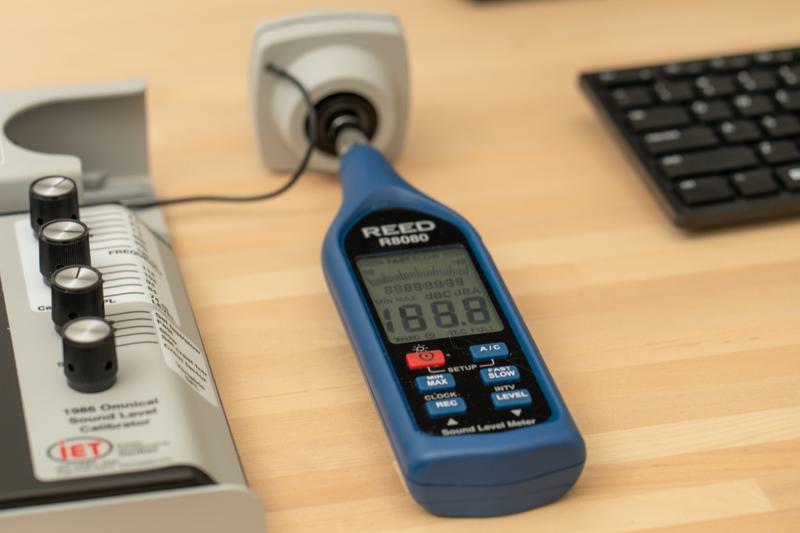
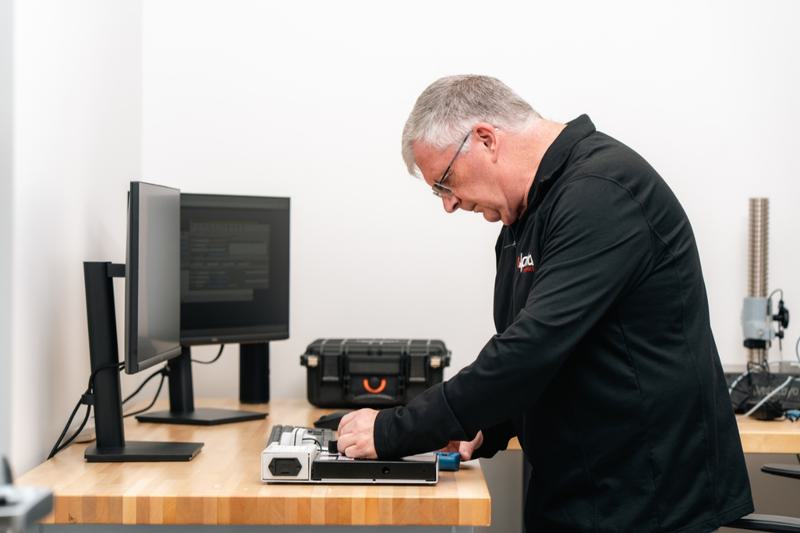
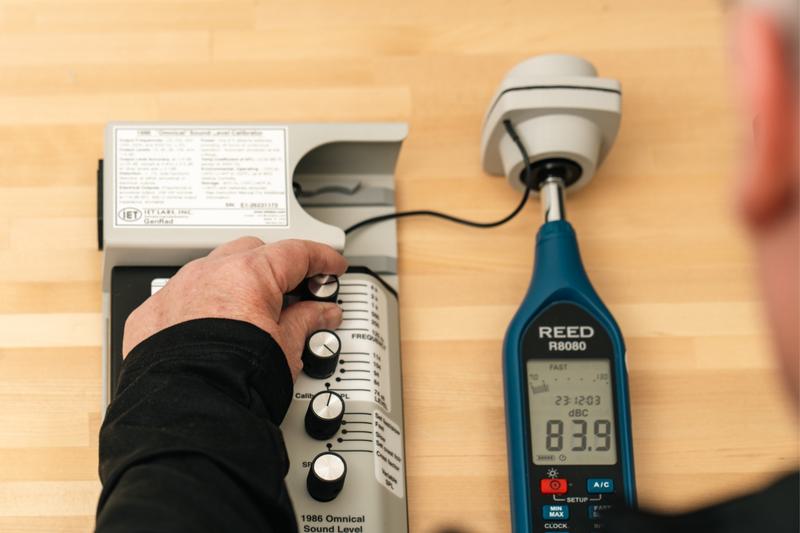
Alpha Controls performs sound calibration using the Omnical 1986 Sound Level Calibrator, with measurement uncertainty as low as ±0.2 dB. Every calibration is performed using NIST-traceable standards, and our ISO/IEC 17025 accreditation for this discipline is currently under development.

Our Advantage:

  • Wider Range: 74 dB to 114 dB across 125 Hz to 4000 Hz, well beyond the industry standard of two data points
  • Low Uncertainty: Measurement accuracy as tight as ±0.2 dB
  • NIST-Traceable Results: Documentation built for HSE audits and regulatory inspection
  • Real-World Relevance: Calibration coverage that reflects the actual noise conditions in your facility
Sound3
Dimensional4

Industries That Rely on Sound Calibration

Sound calibration matters anywhere noise levels affect worker safety or fall under regulatory oversight:

  • Manufacturing & Industrial Facilities: Meeting HSE noise monitoring requirements
  • Pharmaceutical & Life Sciences: Supporting environmental and workplace safety programs
  • Facilities with Dedicated HSE Teams: Giving EHS managers and safety coordinators data they can stand behind
  • Environmental & Acoustic Consultants: Verified instruments for field and compliance work