Press Enter
OMEGA

OMB-DAQ-2408 USB Data Acquisition Modules for Temp & Voltage

24-Bit Multifunction USB Data Acquisition Modules for Temperature and Voltage Measurement
Have questions? We're here to help!

 The OMB-DAQ-2408 Series are multifunction DAQ devices designed for highly-accurate voltage or temperature measurements. Each device features up to 16 single ended (SE)/8 differential (DIFF)

analog inputs. Each device includes 8 digital I/O and two counter inputs. The OMB-DAQ-2408-2AO
also features two analog outputs. Each device in the series offers 24-bit resolution for ultra-accurate voltage or thermocouple measurements.
 
Analog Input
Each device includes 16 SE/8 DIFF analog inputs which you can configure for voltage or thermocouple input on a per-channel basis. Eight software-selectable voltage input ranges are provided. You can configure these ranges on a per-channel basis from ±10V to ±0.078V. When measuring thermocouples, configure analog inputs in DIFF mode. All devices also include open thermocouple detection to identify improperly working thermocouples.
 
Sample Rate
OMB-DAQ-2408 modules can sample analog input channels at up to 1 kS/s.
 
Digital I/O
Eight digital I/O channels are included with each OMB-DAQ-2408
and you can read from or write to each individual bit.
 
Counters
Two 32-bit counters are included with OMB-DAQ-2408 modules. The TTL level inputs
are capable of read/write rates of up to 500 Hz and an input frequency of up to 1 MHz.
 
Analog Output
(OMB-DAQ-2408-2AO Only)
The OMB-DAQ-2408-2AO includes two 16-bit analog outputs. Each output has a ±10V range.
Both outputs can be updated at a rate of up to 500 S/s per channel; one output can be updated
at a rate of 1 kS/s.
 
Software
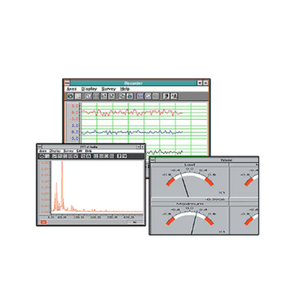
The OMB-DAQ-2408 modules ship with an impressive array of software, including the new TracerDAQ®, a full-featured, out-of-the-box data logging, viewing, and analysis application. Driver support and detailed example programs are included for Universal Library programming libraries for Microsoft® Visual Studio® programming languages, and other languages, including DASYLab®, and ULx for NI LabVIEW® (comprehensive library of VIs and example programs compatible with 32-bit and 64-bit LabVIEW v8.5 through 2012) and InstaCalTM installation, calibration and test utility-powerful solutions for programmers and nonprogrammers alike. These modules operate under Microsoft Windows® XP (32-bit only) and VISTA/7/8 (32-bit and 64-bit) operating systems.
• Measures Thermocouples or Voltage
• Up to 16 Analog Inputs
• 24-Bit Resolution
• Up to 1 kS/s Sampling
Pin NamesCTR0, CTR1
Number of Channels2 channels
Resolution32-bits
Counter TypeEvent counter
Input TypeSchmitt trigger, rising edge triggered
Input SourceCTR0 (pin 44), CTR1 (pin 42)
Counter Read/Writes Rates (Software Paced)
Counter ReadSystem dependent, 500 reads per second.
Counter WriteSystem dependent, 500 writes per second.
Analog Input
A/D Converter TypeADS1256, 24-bit Sigma Delta
A/D Data Rates3750 S/s, 2000 S/s, 1000 S/s, 500 S/s, 100 S/s, 60 S/s, 50 S/s, 25 S/s, 10 S/s, 5 S/s, 2.5 S/s
Throughput (Software-Selectable for Single Channel & Multiple Channels)
Single Channels2.5 to 1102.94 S/s
Multiple Channels0.16 to 1102.94 Hz
Number of ChannelsUp to 16 channels individually software-selectable
as single ended (SE) or differential (DIFF); thermocouples require differential mode; for each channel configured as differential, you lose one single-ended channel
Input Isolation500 Vdc min between field wiring and USB interface
Channel ConfigurationsTemperature sensor input, software-selectable to match sensor type; voltage input
Input Voltage Range
Thermocouple Mode±0.078125V
Voltage Mode ( Software-Selectable)±10V, ±5V, ±2.5V, ±1.25V, ±0.625V,
±0.3125V, ±0.15625V, ±0.078125V
Absolute Maximum Input Voltage
CxH-CxL Relative to GND±22V max (power on), ±10V max (power off)
Input Impedance10 M? (power on), 390 ? (power off)
Input Leakage Current±20 nA
Input Voltage>±22V (power on/off): ±1µ A max
Input Capacitance590 pf
Maximum Working Voltage (Signal + Common Mode)
Voltage Mode±10.25V max
Common Mode Rejection Ratio
Thermocouple Mode (fIN = 60 Hz)110 dB
Voltage Mode (fIN = 60 Hz, All Input Ranges)90 dB
ADC Resolution24-bits
CrosstalkAdjacent channels, 100 dB
Input CouplingDC
Channel Gain QueueUp to 64 elements, software-selectable channel and range
Warm-Up Time45 minutes min
Open Thermocouple DetectSoftware-selectable for each channel
CJC Sensor Accuracy15 to 35°C: ±0.5°C typ
0 to 55°C: ±1.0°C max
Throughput RateThe maximum throughput of an OMB-DAQ-2408 module is 1.1 kS/s aggregate.
The OMB-DAQ-2408 provides the ability to set conversion rates on a per-channel basis. This feature gives the user flexibility and control over noise averaging for each channel.
Analog Voltage Output
(OMB-DAQ-240/-2AO only)
Digital to Analog ConverterDAC8552
Number of Channels2
Resolution16-bits
Output Ranges
Calibrated±10 V
Uncalibrated±10.05V, software-selectable
Output TransientHost computer is reset, powered on, suspended or a reset command is issued to device
Duration2 s
Amplitude2V p-p
Initial Power On
Duration50 ms
Amplitude5V peak
Differential Non Linearity±0.25 LSB typ, ±1 LSB max
Output CurrentAOUTx pins, ±5.0 mA max
Power On and Reset StateDACs cleared to zero-scale, 0V, ±50 mV
Settling TimeTo rated accuracy, 10V step, 75 µs
Slew Rate1.0 V/µ
Throughput
Single-Channel1000 S/s max, system-dependent
Multi-Channel1000 S/s /#ch max, system-dependent
Calibrated Absolute Accuracy
Range±10V
Accuracy(±LSB): 16.0
Digital Input
Number of I/O8 channels
ConfigurationEach DIO bit can be independently read from (DIN) or written to (DOUT).
DIN bits can be read at any time whether the DOUT is active or tri-stated
Input Voltage Range0 to 15V
Input TypeCMOS (Schmitt trigger)
Input Characteristics47 k? pull-up/pull-down resistor, 28 ? series resistor
Maximum Input Voltage Range0 to 20V max (power on/off, relative to DGND)
Pull-Up/Pull-Down ConfigurationAll pins pulled up to 5V through individual 47 k? resistors
(the J6 shorting block default position is pins 1 and 2) Pull-down capability is available by placing the J6 shorting block across pins 2 and 3
Transfer Rate (Software Paced)500 port reads or single bit reads per second typ
Input High Voltage1.3 to 2.2V
Input Low Voltage1.5 to 0.6V
Schmitt Trigger Hysteresis0.4V to 1.2
Digital Output
Number of Channels8 channels
ConfigurationEach DIO bit can be independently read from (DIN) or written to (DOUT).
DIN bits can be read at any time whether the DOUT is active or tri-stated.
Output Characteristics47 k? pull-up, open drain (DMOS transistor) internally connected to DGND
Pull-Up Configuration: All pins pulled up to 5V through individual 47 k? resistors
(the J6 shorting block default position is pins 1 and 2).
Transfer Rate (Software Paced)500 port writes or single bit writes per second typ
Input High Voltage1.3 to 2.2V
Input Low Voltage1.5 to 0.6V
Schmitt Trigger Hysteresis0.4V to 1.2
Digital Output
Number of I/O8 Channels
ConfigurationEach DIO bit can be independently read from (DIN) or written to (DOUT).
DIN bits can be read at any time whether the DOUT is active or tri-stated.
Output Characteristics47 k? pull-up, open drain (DMOS transistor)
internally connected to DGND
Pull-Up ConfigurationAll pins pulled up to 5V through individual 47 k? resistors
(the J6 shorting block default position is pins 1 and 2).
Transfer Rate (Software Paced)
Digital Output500 port writes or single bit writes per second typ
Output Voltage Range0 to 5V (no external pull up resistor, internal 47 k? pull-up resistors connected to 5V by default); 0 to 15V max
Drain to Source Breakdown Voltage50V min
Off State Leakage Current1.0 µA
Sink Current Capability150 mA max (continuous) per output pin 150 mA max (continuous) for all eight channels
DMOS Transistor On-Resistance (Drain to Source)4?
Counter

Request a Calibration Quote

We’re here to make calibration easy. Request a quote today and let our team give you the care, precision, and service you can trust.
Learn more

Browse By Brands

Uncover the brands that set the standard for quality and dependability in every industry we serve.
Learn more