
Pulsar Measurement
MicroFlow Area Velocity Flow Sensor
Delivers non-contacting, accurate and repeatable velocity flow measurement
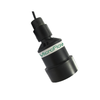
MicroFlow provides a non-contacting, velocity measurement solution for open channels. Use MicroFlow as a stand-alone device for simple velocity measurement or pair it with a dB Ultrasonic Transducer for a complete area-velocity system.
Area-velocity calculations using MicroFlow provide a cost-effective flow measurement solution compared to the installation of a Primary Measuring Device (PMD). Additionally, the hydraulics of a site can sometimes not allow for restriction within the channel, therefore it would be unsuitable for a PMD to be installed, the MicroFlow provides a viable solution.
Area-Velocity Measurement for Channels <1.5 Meter Wide
For channels less than 1.5 m (4.9 ft) wide, MicroFlow can be combined with the dBMACH3 flow transducer (or another dB Transducer) and a FlowCERT controller to gain accurate area-velocity readings.
Area-velocity for Channels >1.5 Meter Wide
For larger channels such as rivers or effluent flow channels that are more than 1.5 m (4.9 ft) wide, more than one MicroFlow should be used to provide improved measurement, averaged across the wider flow profile, with the selected dB Transducer and an Ultimate Controller for an area-velocity flow system that averages the velocity from multiple sensors across the channel, ensuring accuracy in difficult to achieve straight-run conditions.
Software & Technology
The MicroFlow sensor uses K-Band radar technology and Pulsar Measurement’s unique analysis software takes readings from the whole width of the channel. Iif more than one MicroFlow is being used, an average reading will be calculated back in the control unit. To gain the most accurate and reliable reading, the end-user should make sure that the MicroFlow unit is mounted at 45 degrees to the water surface.
The K-Band radar technology works by using short pulses of microwaves, which are transmitted by an enclosed antenna on the face of the unit. When reflected off a moving surface, the signal experiences a shift in frequency characteristics. The reflected signal is captured by the onboard microprocessor via the antenna and analyzed to determine the velocity.
• Non-contacting
• Cost-effective
• Lightweight, compact and robust design
• Minimal installation costs
• No interuption to process
• Maintenance Free
• ATEX Ex mb Zones 1 & 2 approval
• RS485 Modbus
Request a Calibration Quote
We’re here to make calibration easy. Request a quote today and let our team give you the care, precision, and service you can trust.
Learn moreBrowse By Brands
Uncover the brands that set the standard for quality and dependability in every industry we serve.
Learn more